CoQ10 — The Full Documentation Chain
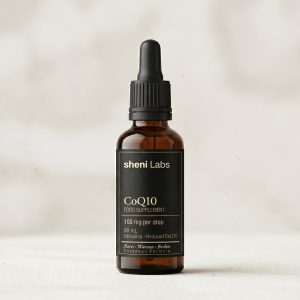
Ubiquinol · reduced form
Status: in development / target specifications. Real CoA results will be published as the first production batch is tested; the D3 page already shows live results.
The principle: a supplement is only as trustworthy as its weakest undocumented step. So we document every step — from the raw ingredient to the bottle in your hands — and for every certificate we explain, in plain language, why it exists. A certificate you don’t understand protects nobody.
Stage 1: The source — before anything reaches the factory
Quality cannot be tested into a finished product; it has to arrive with the raw material. Under EU food law (Regulation 178/2002, Art. 17), the operator is legally responsible for everything that goes in.
| Document / Certificate | What it is | Why it exists (in plain language) |
|---|---|---|
| Supplier Certificate of Analysis (CoA) | Test report accompanying every raw-material lot: identity, potency, purity, contaminants. | So we know what actually arrived — not what the invoice says. Ingredient substitution and dilution are the most common forms of supplement fraud; the WHO warns about substandard and falsified products entering legitimate supply chains. |
| Identity testing on receipt | Independent re-check (HPLC/spectroscopy) that the material is the declared compound and form before it is released to production. | A CoA is the supplier’s word; identity testing is our check on it. The correct form matters as much as the correct compound — the wrong isomer or ester can be inactive. How identity testing catches fraud — GMJ News. |
| Pharmacopoeial grade (Ph.Eur./USP) | Where a monograph exists, the ingredient is purchased to European Pharmacopoeia specification. | A pharmacopoeia monograph is a published, public purity standard — it means “pure” has a legal, testable definition instead of being a marketing word. |
| Non-GMO, irradiation-free, BSE/TSE-free specification | The active-ingredient master specification requires: GMO — free; irradiation — free; BSE/TSE — free. | These exclusions are locked at specification level — genetically modified sources, irradiated raw materials and animal-disease risk vectors are ruled out before a single kilogram is purchased. |
Stage 2: Transport to the factory
Actives can degrade before production even begins. Fat-soluble vitamins and oils are sensitive to heat and light in transit.
| Document / Certificate | What it is | Why it exists (in plain language) |
|---|---|---|
| Supplier qualification file | Documented approval of each supplier: audits, history, specifications. | So materials come only from sources with a verified track record — the first firewall against falsified ingredients. |
| Inbound transport & condition records | Shipping documentation including temperature exposure where required; goods inspected on arrival. | Oxidation roughly doubles with every 10 °C of temperature increase (Arrhenius kinetics). A perfect ingredient shipped badly is no longer a perfect ingredient. This follows the logic of EU Good Distribution Practice (GDP). |
Stage 3: The factory — management systems
Every Sheni Labs product is made in one confirmed facility in Poland (EU). These certificates cover the facility itself. Each one is independently audited — never self-declared — and each exists for a specific reason:
| Document / Certificate | What it is | Why it exists (in plain language) |
|---|---|---|
| GMP (Good Manufacturing Practice) | Good Manufacturing Practice per Codex Alimentarius CXC 1-1969 Rev.5 (2023), certified by SGS; certified since 2020, current certificate valid to 29 March 2029 with annual surveillance. | GMP means quality is built into the process — trained staff, qualified equipment, written procedures — instead of hoping to catch problems in the final test. Final testing samples a batch; GMP governs all of it. |
| ISO 22000:2018 | Food safety management system certified by SGS under UKAS accreditation (IAF multilateral recognition); certified since 2023, valid to 29 March 2029. Food category CIV — ambient stable products. | An external auditor returns every year and can withdraw the certificate. It converts “we take safety seriously” into something a third party continuously verifies. |
| HACCP | Hazard analysis and critical control points certified by SGS (CXC 1-1969, latest revision 2022); legally required in the EU under Reg. 852/2004; valid to 29 March 2029. | Instead of only testing the end product, HACCP identifies where in the process contamination could occur and controls those exact points continuously. |
| Halal & Kosher certification | Independent religious certification bodies auditing ingredients, production lines, and packaging. | Beyond serving observant consumers, these are two additional independent organisations that physically inspect the ingredient chain — an extra verification layer at no cost to anyone else. |
| EU food-business registration (GIS) | Entered in the register of the Polish State Sanitary Inspectorate as a Dietary Supplement Manufacturing Company (State District Sanitary Inspectorate, Kraków) under the Polish Act on Safety of Food and Nutrition and Reg. (EC) 852/2004. | Registration means legal accountability: the facility is on a government register, subject to unannounced official inspection, and legally traceable. |
| ISO/IEC 17025 (testing laboratory) | The independent third-party laboratory that releases our batches is itself accredited (ILAC/PCA). | The lab checking the product is also checked. 17025 accreditation means its methods, equipment, and staff competence are audited — so a test result is internationally recognised, not just a printout. |
| Statement of Standards (ethical & dietary) | Manufacturer’s signed declaration: products not tested on animals, cruelty-free, vegan production standards, natural products; gluten-free confirmed by the manufacturer (declaration held on file). | Ethical claims are cheap to print and hard to check — a signed, dated corporate declaration makes them auditable statements rather than marketing words. What a declaration is worth — GMJ News. |
Stage 4: Production of this product
Once materials are released and the facility qualifies, the batch itself is documented end to end.
| Document / Certificate | What it is | Why it exists (in plain language) |
|---|---|---|
| Batch manufacturing record | Complete record of each production run: material lots used, quantities, times, equipment, operators. | Traceability is the legal backbone of EU food law (Reg. 178/2002, Art. 18). If anything is ever wrong, the exact batch — and only that batch — can be identified and recalled. What a LOT number really is — GMJ News. |
| In-process quality control | Samples pulled at the start, middle, and end of each run. | A mixing error shows up during production, when it can still be corrected — not after 10,000 bottles are filled. |
Stage 5: The finished product — independent batch testing
Before release, every batch goes to the ISO/IEC 17025-accredited third-party laboratory. These four tests apply to every Sheni Labs product; the ingredient-specific tests below them are dictated by this product’s chemistry.
| Test | What it measures | Why this test (in plain language) |
|---|---|---|
| Potency assay | Measures the actual amount of active ingredient against the label claim. | Label accuracy is a legal requirement (Reg. 1169/2011) — and independent surveys repeatedly find supplements containing far less (or more) than declared. This is the test that keeps the label honest. How supplements fail label tests — GMJ News. |
| Identity confirmation | Confirms the molecule and its exact form (e.g. the right isomer, ester, or stereochemistry). | Protects against the most profitable fraud: substituting a cheaper, inactive, or wrong-form ingredient that a simple potency test might miss. |
| Heavy metals (ICP-MS) | Lead, arsenic, cadmium, mercury against ICH Q3D (R2) permitted daily exposures for the oral route. | These metals accumulate in the body over years; a daily-use product must be held to strict limits. ICP-MS detects them at parts-per-billion levels. |
| Microbiology (Ph.Eur. 5.1.8) | Total counts, yeasts/moulds, and specified pathogens. | A product taken every day must be microbiologically safe every day. Ph.Eur. 5.1.8 is the European pharmacopoeial standard for non-sterile oral preparations. |
Ingredient-specific tests for this product
The universal panel above applies to every product. CoQ10’s own chemistry requires the following additional tests — each with its reason:
Oxidation state testing — the essential CoQ10 test
| Test | Method | Specification | Why this test |
|---|---|---|---|
| Ubiquinol:ubiquinone ratio | Electrochemical HPLC (EC-HPLC) | ≥95% as ubiquinol (reduced form) | This is the defining test for CoQ10 form. Ubiquinol and ubiquinone have distinct electrochemical signatures, detectable by HPLC with an electrochemical detector. Standard UV-HPLC cannot reliably distinguish them at trace levels. A batch failing this test means the product contains oxidised CoQ10 regardless of what the label says. |
| Oxidation stability (inert atmosphere) | Headspace O₂ testing / packaging validation | O₂ <1% in headspace; nitrogen-filled | Ubiquinol oxidises on air contact. Bottles must be filled and sealed under nitrogen or inert gas. This test confirms the packaging process maintained the reduced form during production — not just at raw material intake. |
Potency and purity
| Test | Method | Specification | Notes |
|---|---|---|---|
| Total CoQ10 content | EC-HPLC or UV-HPLC | ≥100 mg per serving (1 drop) | Label claim — 100 mg/day is the most widely-studied dose in cardiovascular and mitochondrial clinical research |
| Purity | HPLC | ≥98.0% | Related substance limit — confirms low levels of CoQ9 (a close structural homologue) and other synthesis or fermentation impurities |
| Related substances (CoQ homologues) | HPLC | CoQ9 ≤1.0%; other impurities ≤0.5% each | CoQ10 synthesis or fermentation produces small amounts of CoQ9 (9 isoprene units instead of 10) and CoQ8. These are biologically inactive impurities. This test is specific to CoQ10 and not required for any other ingredient in this line. |
Residual solvents and contaminants
| Test | Method | Limit | Notes |
|---|---|---|---|
| Residual solvents | GC-Headspace / ICH Q3C | ICH Q3C Class 2 limits | CoQ10 is produced by microbial fermentation or chemical synthesis, both of which use organic solvents during downstream processing. Residual solvent testing confirms adequate removal. This test is required for CoQ10 but not for all other products in this line. |
| Lead, Arsenic, Mercury, Cadmium | ICP-MS / Ph.Eur. | ICH Q3D oral limits | Standard heavy metals panel for oral supplements |
| Microbiology | Ph.Eur. 5.1.8 | Complies | Fermentation-derived CoQ10 requires microbiological confirmation that no viable microorganisms from the fermentation process remain |
Carrier oil (MCT, Miglyol® 812 N)
Same specification as Vitamin D3 — Ph.Eur. grade, purity ≥95.0%, peroxide value ≤1.0 meq O₂/kg, Kosher and Halal certified.
Finished batch testing (independent)
Every batch independently tested before release (how to read a CoA), including the ubiquinol:ubiquinone ratio confirmation. Results by LOT number at Verify Your Batch. The oxidation state ratio will be reported for every CoQ10 batch — confirming it is actually ubiquinol, not partially oxidised to ubiquinone.
⚠ The warfarin interaction is stated on this product’s label, on the product page, and in the supplement facts panel. Any prescriber managing a patient on CoQ10 and anticoagulant therapy should monitor INR closely, as CoQ10 can reduce warfarin efficacy. Reference: Engelsen J et al. Thromb Haemost. 2002;87(6):1075–1076.
← Astaxanthin testing Back to Quality & Certifications
Stage 6: Packaging — the materials touching the product
Packaging is in direct, continuous contact with the product for its entire shelf life — so the packaging needs its own certificates.
| Document / Certificate | What it is | Why it exists (in plain language) |
|---|---|---|
| Food-contact declaration — amber glass bottle | Declaration of compliance under EU Reg. 1935/2004 (food-contact materials); UV-filtering amber glass. | Anything touching food must be certified not to transfer harmful substances into it — that is exactly what Reg. 1935/2004 exists for. The amber colour is functional, not aesthetic: it blocks the under-450 nm light that degrades this product’s active. |
| Food-contact declaration — dropper & closure | Compliance documentation for the dropper assembly and cap materials (Reg. 1935/2004 / Reg. 10/2011 for plastics). | The dropper touches the product on every single use. Plastic parts have specific migration limits — certified so nothing leaches into the oil. Each dropper lot additionally arrives with the packaging supplier’s quality-control certificate (glass pipette, HDPE and nitrile components) confirming conformity with the material specification and technical drawing. |
| Carrier oil certificates (MCT, Miglyol® 812 N) | Ph.Eur.-grade specification, own CoA per lot, plus independent Halal and Kosher certificates (IOI Oleochemical). | The carrier oil is most of what is physically in the bottle — it deserves the same scrutiny as the active. Its peroxide value (≤1.0 meq O₂/kg) is what keeps the base oil from going rancid — the most recent supplier CoA measured <0.1 meq O₂/kg and 99.3% content against a ≥95% specification. |
| Inert-gas filling record (where applicable) | Nitrogen/CO₂ atmosphere documented for oxidation-sensitive actives (CoQ10, astaxanthin). | Some actives oxidise on contact with air alone. Removing the air is the only real fix — and it has to be documented per batch, because it is invisible in the finished bottle. |
| Glass, not plastic — the microplastics decision | Amber glass primary packaging instead of plastic bottles, for every product in the line. | Plastic containers can shed micro- and nanoplastic particles into their contents — found in 93% of bottled waters tested (Mason 2018) — and fatty, oil-based liquids are of particular concern for migration. Glass is inert and sheds nothing. For a daily oil taken over years, we remove the question entirely. Glass vs plastic — GMJ News · The full evidence → |
Stage 7: Transport from the factory to Georgia
A tested batch can still be ruined between the factory gate and the warehouse.
| Document / Certificate | What it is | Why it exists (in plain language) |
|---|---|---|
| Shipping & condition documentation | Transport records for each consignment, with protection from extreme heat; temperature-sensitive logic borrowed from pharmaceutical GDP. | Stability data assume the product was kept within its storage conditions. A truck at 60 °C in summer can undo months of shelf life — documentation is how we know it did not happen. Heat kills supplements — GMJ News. |
| Import & customs documentation | Complete legal import trail into Georgia for each consignment. | A documented import chain means every bottle on the Georgian market is traceable to a legal consignment — the difference between an authentic product and a grey import of unknown handling. |
| Georgian state registration (National Food Agency) | The Georgian distributor is a registered food business operator under the Georgian Food/Feed Safety Code; products on the Georgian market are subject to National Food Agency (სურსათის ეროვნული სააგენტო) state control and market surveillance. | A registered Georgian legal entity is accountable to Georgian authorities — you have domestic consumer rights, official recall channels, and a local address responsible for the product, not only a producer abroad. |
Stage 8: Storage in Georgia
The last stage before the product reaches you.
| Document / Certificate | What it is | Why it exists (in plain language) |
|---|---|---|
| Warehouse condition standard | Cool, dry, light-protected storage; conditions matching the label storage instructions. | Every expiry date on the label is only valid if the product was stored as specified. Storage conditions are part of the stability contract with you. |
| FEFO stock rotation | First-expired, first-out rotation records. | Guarantees that the bottle you receive is never an old one that sat behind newer stock — the standard rotation discipline of pharmaceutical warehousing. |
Stage 9: Verification — in your hands
Every bottle carries a LOT number. Enter it on Verify Your Batch and you will see this exact batch’s documentation — production date, expiry, and certificates as they are published. The whole chain above exists so that this last step means something: you should not have to take our word for anything on this page. How to read a Certificate of Analysis — GMJ News.
Regulatory references on this page: EU Reg. 178/2002 (general food law, traceability); EU Reg. 852/2004 (hygiene, HACCP); EU Reg. 1935/2004 & 10/2011 (food-contact materials); EU Reg. 2023/2006 (GMP); EU Reg. 1169/2011 (food information); ICH Q3D (R2) (elemental impurities); Ph.Eur. 5.1.8 (microbiology); Codex Alimentarius CXC 1-1969 (HACCP); ISO 22000:2018; ISO/IEC 17025; WHO guidance on substandard and falsified products. Georgian Food/Feed Safety Code — National Food Agency state control. Certificate copies: info@accreditation.ge · WhatsApp.