
This is the single evidence page for every SHENI Paris product formulated by Sheni Labs. For each of the eight ingredients it sets out, in order: what the molecule does in the body, how large the nutritional gap is and who falls into it, what the clinical trials actually measured, why we chose this form and this dose, and who needs to be careful. Every number carries a numbered reference to a peer-reviewed source or regulatory document, listed in full at the end. Sections marked in green rest on published human data; amber marks mechanistic or early-stage evidence; grey marks original PHIG research that is still being compiled.
The eight ingredients at a glance
| Ingredient | The gap | Key evidence | Sheni Labs form & dose |
|---|---|---|---|
| Vitamin D3 | 40% of European adults below 50 nmol/L | D3 raises 25(OH)D more effectively than D2 (meta-analysis) | Cholecalciferol 2,000 IU / drop in MCT |
| Omega-3 | Most of the world below the 8% Omega-3 Index target | EU-authorised claim at 250 mg EPA+DHA/day | Algal oil 1,000 mg EPA+DHA / 5 mL |
| Vitamin E | >90% of adults below the estimated average requirement | Natural RRR-α-tocopherol preferentially retained by α-TTP | Natural d-α-tocopherol 134 mg / drop |
| Astaxanthin | Not dietary — evidence is dose-specific | Two RCTs at 6 mg/day; EFSA ADI 0.2 mg/kg | Natural H. pluvialis ester 12 mg / drop |
| CoQ10 | 40–50% cardiac decline by age 77; statins lower synthesis | Q-SYMBIO RCT (n = 420); ubiquinol higher plasma levels | Ubiquinol 100 mg / drop |
| Vitamin K2 | Widespread functional insufficiency (dp-ucMGP) | Rotterdam cohort (n = 4,807); 3-year MK-7 RCTs | All-trans MK-7 100 µg / drop |
| Vitamin B12 | 6–20% of adults >60; near-universal in unsupplemented vegans | Oral 500–2,000 µg equivalent to injection (RCT) | Methylcobalamin 500 µg / drop |
| Vitamin A | BCO1 variants cut β-carotene conversion by up to ~70% | Narrow UL (3,000 µg RE) → exact-NRV dosing | Retinyl palmitate 800 µg RE (100% NRV) / drop |
Global nutritional gaps — the case for these eight products
Sheni Labs was founded on a specific observation: the ingredients in this line address some of the most widespread and best-documented nutritional gaps in the adult population, or — in the case of astaxanthin and CoQ10 — molecules with a well-defined human trial record at a specific dose. The following sections summarise the global burden for each and connect it to the exact formulation on the label.
Vitamin D3 — the most common deficiency in EuropePublished human data
What it does
Cholecalciferol is a prohormone. It is hydroxylated first in the liver to 25-hydroxyvitamin D — the form measured in blood tests — and then in the kidney to the active hormone calcitriol, which regulates intestinal calcium absorption, bone mineralisation and the expression of several hundred genes.[2] Serum 25(OH)D is the accepted status marker; 50 nmol/L is the most widely used sufficiency threshold.[1][2]
The gap
Deficiency (<50 nmol/L) affects an estimated 40% of European adults[1] and more than one billion people worldwide.[2] A NHANES analysis of 13,432 US adults found 41.6% deficient.[3] Georgia sits at 41–43°N, the latitude band where winter UVB is too weak for cutaneous synthesis for several months of the year; yet no population-representative Georgian prevalence figure has been published — a gap PHIG is addressing below. Risk concentrates in older adults, people with darker skin, indoor workers and those with higher body fat.[2]
What the trials show
A BMJ individual-participant meta-analysis of 25 RCTs (n = 11,321) found that vitamin D supplementation reduced the risk of acute respiratory tract infection, with the largest effect in participants who were deficient at baseline and received daily or weekly dosing rather than large boluses.[4] A separate meta-analysis of head-to-head trials showed that D3 (cholecalciferol) raises serum 25(OH)D significantly more effectively than D2 (ergocalciferol).[24]
Why this form and this dose
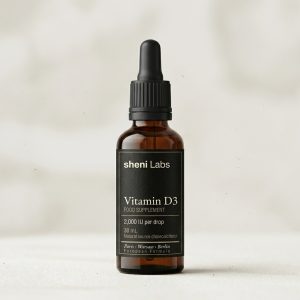
Sheni Labs uses cholecalciferol, not ergocalciferol, because of the D3-over-D2 trial evidence.[24] One drop delivers 2,000 IU (50 µg) — a daily dose that reliably moves deficient adults above 50 nmol/L, while remaining at half the EU tolerable upper intake level of 4,000 IU (100 µg) per day for adults.[25] The vitamin is dissolved in MCT oil because a lipid vehicle improves absorption of this fat-soluble molecule compared with powder or ethanol.[26]
Read more (GMJ News): Vitamin D: who is at risk and how to know · D3 vs D2: the full evidence
Vitamin D — full ingredient profile on supplement.ge
Omega-3 (EPA + DHA) — a global intake shortfallPublished human data
What it does
EPA and DHA are long-chain omega-3 fatty acids incorporated into every cell membrane, where they alter membrane fluidity and serve as precursors for resolvins and other lipid mediators. The Omega-3 Index — EPA + DHA as a percentage of red-blood-cell fatty acids — is a validated tissue status marker; values above 8% are considered optimal and below 4% low.[28]
The gap
A 2025 global intake survey found that the majority of the world’s population does not reach recommended EPA + DHA intakes, with the lowest levels in populations that eat little oily fish.[5] EFSA’s dietary reference value for adults is 250 mg EPA + DHA per day.[6] Georgian fish consumption is low by European standards and no Georgian intake survey exists — see the PHIG register below.
What the regulators authorise
EPA + DHA is one of the few ingredients on this site with authorised EU health claims: at 250 mg/day, EPA and DHA contribute to the normal function of the heart, and DHA contributes to the maintenance of normal brain function and normal vision.[27] These are the only claims Sheni Labs makes for this product. How EFSA claims work.
Why this form and this dose
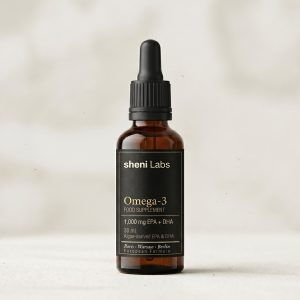
Sheni Labs Omega-3 is algal oil from Schizochytrium sp. — the same microalgae that fish obtain their EPA and DHA from — which removes the heavy-metal and sustainability questions attached to fish oil and makes the product suitable for vegans.[5] One 5 mL serving provides 1,000 mg EPA + DHA, four times the EFSA reference value and in the range used in most clinical trials. Because polyunsaturated oils oxidise, every batch is released against a peroxide-value specification: why the peroxide value on the certificate matters.
Read more (GMJ News): Why 3 in 4 people worldwide don’t get enough omega-3 · Why marine microalgae are the right source
EPA / DHA — full ingredient profile on supplement.ge
Vitamin E — nine in ten adults fall shortPublished human data
What it does
α-Tocopherol is the principal lipid-phase antioxidant in human membranes and lipoproteins, interrupting lipid peroxidation chain reactions. The liver’s α-tocopherol transfer protein (α-TTP) selectively retains the natural RRR stereoisomer and discards most of the others — which is why the form on the label matters.[30][8]
The gap
US dietary data show that more than 90% of adults fail to reach the estimated average requirement for vitamin E from food alone.[7] EFSA sets the adequate intake at 13 mg/day for men and 11 mg/day for women.[29] Frank deficiency is rare, but chronically low intake is associated with impaired antioxidant defence and is especially common in low-fat diets.[31]
Natural versus synthetic
Synthetic vitamin E (all-rac-α-tocopherol) is an equal mixture of eight stereoisomers; only one is the natural RRR form. A deuterium-labelled human study found natural RRR-α-tocopherol has roughly twice the bioavailability of the synthetic mixture,[8] consistent with α-TTP’s binding preference.[30]
Why this form and this dose
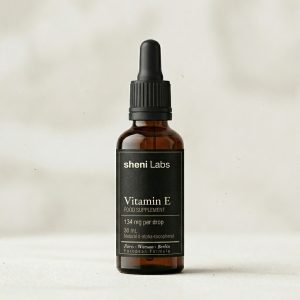
Sheni Labs uses natural d-α-tocopherol (RRR) only. One drop delivers 134 mg — 1,117% of the EU NRV of 12 mg — a supplemental dose that sits well below the EU tolerable upper intake level of 300 mg/day. What the NRV percentage means.
Read more (GMJ News): Natural vs synthetic Vitamin E explained · Why 9 in 10 fall short
Vitamin E — full ingredient profile on supplement.ge
Astaxanthin — a dose-specific evidence baseMechanistic / early trials
What it is
Astaxanthin is a xanthophyll carotenoid produced by the microalga Haematococcus pluvialis under stress; it is what makes salmon and flamingos pink. Its molecular structure spans the full width of the lipid bilayer, with polar end groups at each membrane surface — a geometry unlike β-carotene or vitamin E.[11] The membrane-spanning mechanism explained.
What the trials show
Astaxanthin is not a deficiency nutrient; the human evidence is dose-specific. Two randomised placebo-controlled trials at 6 mg/day — Tominaga 2017 (n = 36)[9] and Ito 2018 (n = 65)[10] — measured significant changes in skin elasticity and UV-related oxidative-stress markers. Lifespan findings come from C. elegans and are not established in humans.[11] The 6–12 mg trial record.
Safety and dose
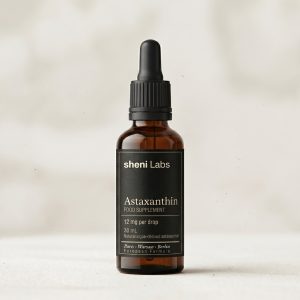
In its 2020 novel-food opinion, EFSA set an acceptable daily intake of 0.2 mg/kg body weight — 14 mg/day for a 70 kg adult — for astaxanthin from H. pluvialis.[32] Sheni Labs delivers 12 mg per drop of natural astaxanthin ester in MCT oil, the upper end of the clinically studied range and inside the EFSA ADI. No EU health claim is authorised for astaxanthin, and we make none.
Read more (GMJ News): Astaxanthin and skin health: what clinical trials show · Astaxanthin and mitochondria: aging research · The membrane-spanning antioxidant mechanism · The 6–12 mg trials
Astaxanthin — full ingredient profile on supplement.ge
Coenzyme Q10 — age- and statin-related declinePublished human data
What it does
CoQ10 is the electron carrier between complexes I/II and III of the mitochondrial respiratory chain and, in its reduced form ubiquinol, the only endogenously synthesised lipid-soluble antioxidant. The body makes it; it is not a vitamin.[12]
The gap
Tissue concentrations fall with age: post-mortem analysis of human cardiac muscle showed a 40–50% decline from young adulthood to age 77 and over.[12] Statins inhibit HMG-CoA reductase, the same pathway that produces CoQ10, and measurably lower plasma levels[13] — relevant to the growing share of adults on long-term statin therapy. CoQ10 and statins.
What the trials show
The Q-SYMBIO multicentre RCT (n = 420) in patients with severe chronic heart failure reported fewer major adverse cardiovascular events in the CoQ10 arm over two years.[14] This is a trial in a clinical population under medical supervision and is reported here as research, not as a claim for this product.
Why this form and this dose
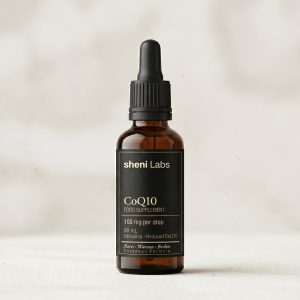
Ubiquinol (reduced CoQ10) produced higher plasma CoQ10 concentrations than the same dose of ubiquinone in a head-to-head human study.[33] Sheni Labs delivers 100 mg ubiquinol per drop in MCT oil — the most common dose in the trial literature. No EU health claim is authorised for CoQ10, and we make none.
Read more (GMJ News): CoQ10 declines with age · Ubiquinol vs ubiquinone · CoQ10 and statins
Coenzyme Q10 — full ingredient profile on supplement.ge
Vitamin K2 (MK-7) — functional insufficiency is commonPublished human data
What it does
Vitamin K is the cofactor for γ-carboxylation of a family of proteins. K1 (phylloquinone) is used mainly by the liver for clotting factors. The menaquinones (K2) reach extra-hepatic tissue, where they activate osteocalcin in bone and matrix Gla protein (MGP) in arterial walls — the protein that inhibits vascular calcification.[15]
The gap
Classic deficiency (bleeding) is rare, but functional insufficiency — measured by circulating uncarboxylated MGP (dp-ucMGP) and uncarboxylated osteocalcin — is widespread outside populations that eat natto or aged cheeses. In the Rotterdam Study (n = 4,807), high dietary menaquinone intake was associated with significantly less coronary calcification and lower coronary-heart-disease mortality.[15]
What the trials show
Three-year randomised MK-7 supplementation in postmenopausal women slowed bone-mineral-density loss[16] and reduced the progression of arterial stiffness.[17]
Why this form and this dose
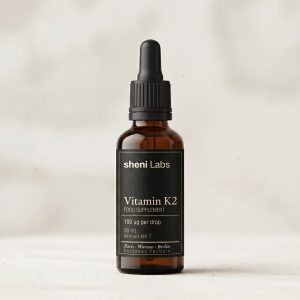
MK-7 has a plasma half-life of about three days versus a few hours for MK-4 and K1, so a single daily dose produces stable tissue levels; at equal doses MK-7 raises serum vitamin K far more than MK-4.[18][35] Sheni Labs uses fermentation-derived all-trans MK-7 at 100 µg per drop — only the all-trans isomer is biologically active, and our certificate of analysis publishes the isomer ratio. Why half-life decides the dose.
Read more (GMJ News): K2 vs K1: Why Menaquinones Reach Bone and Blood Vessels · MK-7 vs MK-4: Why Half-Life Decides the Dose · Vitamin K and Warfarin: What Anticoagulated Patients Must Know
Vitamin K — full ingredient profile on supplement.ge
Vitamin B12 — older adults, plant-based diets, and common medicinesPublished human data
What it does
Cobalamin is the cofactor for methionine synthase (methylcobalamin) and methylmalonyl-CoA mutase (adenosylcobalamin) — one-carbon metabolism, DNA synthesis and myelin maintenance. Absorption of food-bound B12 depends on gastric acid and on intrinsic factor, a system with a capacity of only about 1.5–2 µg per meal.[19][36]
The gap
Deficiency or marginal status affects an estimated 6–20% of adults over 60 in Western surveys, driven by atrophic gastritis and falling intrinsic-factor secretion.[19][20] A randomised placebo-controlled trial showed that long-term metformin progressively lowers B12;[37] proton-pump inhibitors act similarly. B12 occurs naturally only in animal-source foods, so prevalence among unsupplemented vegans approaches universality over time.[20] No Georgian population data exist — see the PHIG register below.
What the trials show
Randomised comparison of high-dose oral cobalamin (2,000 µg/day) against intramuscular injection found oral therapy at least as effective in correcting haematological and neurological markers.[21] Because only ~1% of an oral dose is absorbed by passive diffusion once intrinsic factor is saturated, a high oral dose is the mechanism that makes this work.[36]
Why this form and this dose
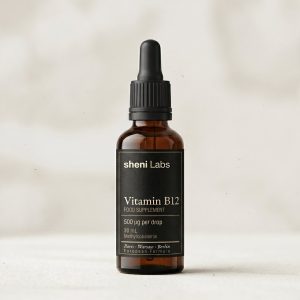
Sheni Labs delivers 500 µg methylcobalamin per drop — within the 500–2,000 µg range trial-proven equivalent to injection[21][36] and ~20,000% of the EU NRV, which is appropriate for a nutrient whose absorption is capped rather than dose-proportional. The amber-glass bottle is functional: cobalamins are photosensitive. Why high-dose oral B12 is the evidence-based dose.
Read more (GMJ News): Why High-Dose Oral B12 Is the Evidence-Based Dose · Who Is at Risk of B12 Deficiency
Cobalamin — full ingredient profile on supplement.ge
Vitamin A — a precision argument, not a megadose argumentPublished human data
What it does
Retinol and its metabolites are required for the visual cycle (11-cis-retinal), for epithelial differentiation and for immune-cell regulation. Preformed vitamin A (retinol, retinyl esters) is absorbed directly; provitamin A carotenoids must be cleaved by the enzyme BCO1.[23]
The gap
Average vitamin A intake in Europe is broadly adequate, so the case for this product is deliberately different: reliability of status. Common variants in the BCO1 gene reduce β-carotene conversion efficiency by up to ~70%, making carotenoid-only intake an unreliable source for a substantial minority of the population.[22] BCO1 genetics explained.
The safety margin
The EU tolerable upper intake level for preformed vitamin A is 3,000 µg RE/day — only 3.75× the NRV of 800 µg.[39][23] A prospective study of 22,748 pregnant women found a higher rate of cranial-neural-crest birth defects above 10,000 IU/day of preformed vitamin A.[38] Vitamin A is therefore the clearest case in the line for exact dosing rather than a high dose.
Why this form and this dose
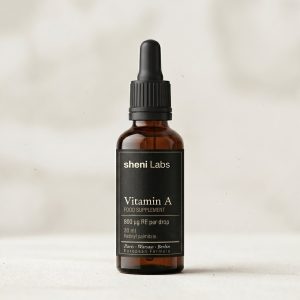
Sheni Labs Vitamin A delivers 800 µg RE of retinyl palmitate per drop — exactly 100% NRV by design — and is released against a two-sided potency specification (90–120% of label), so that a drop cannot silently over-deliver. Why exactly 100% NRV.
Read more (GMJ News): Why Exactly 100% NRV: Vitamin A’s Narrow Safety Margin Explained · Retinol vs Beta-Carotene: BCO1 Genetics · Vitamin A and Pregnancy: The Teratogenicity Warning Explained
Vitamin A — full ingredient profile on supplement.ge
Why liquid drops in MCT oil, in amber glass
Seven of the eight ingredients on this page are fat-soluble. Dissolving them in a lipid carrier improves absorption relative to dry powders,[26] and a dropper lets the dose be titrated to the individual — one drop for a child-sized or maintenance dose, several for a physician-directed loading dose — without splitting capsules. The carrier is pharmaceutical-grade MCT oil (Miglyol® 812 N, Ph.Eur.), chosen for oxidative stability and neutral taste. Amber glass blocks the UV wavelengths that degrade retinol, cobalamin and polyunsaturated oils, and — unlike plastic — does not shed microplastics into an oil that sits in contact with it for two years.
Read more (GMJ News): Why liquid oil drops · MCT oil as a carrier · Glass vs plastic · Heat degradation in transport
PHIG original research — Georgia-specific data
Everything above cites research from other populations. This register tracks original research that the Public Health Institute of Georgia and the Georgian Medical Journal are generating about Georgia itself. Each project is tied to a product in the line, and no Georgian figure will appear on this site until it has been measured and peer-reviewed.
Vitamin D deficiency prevalence in Georgia
A Georgia-specific serum 25(OH)D prevalence study is being compiled through GMJ and PHIG, stratified by season, age and region. Deficiency varies with latitude, diet and sun-exposure habits; a Scandinavian or North American figure does not describe Georgia.
Omega-3 intake in Georgia
A dietary-intake assessment of EPA + DHA in Georgian adults. Georgian fish consumption differs markedly from the Northern European and Japanese populations most often studied.
Vitamin B12 status in older Georgians
Serum B12 and methylmalonic acid in adults over 60, including long-term metformin and PPI users — the two medication groups with the strongest published signal.
Antioxidant status in Georgia
Plasma tocopherol and carotenoid status in Georgian adults — relevant to Vitamin E and Astaxanthin.
CoQ10 levels and cardiovascular risk in Georgia
No population-level CoQ10 data for Georgia exist in the published literature.
Verify any ingredient independently
For ingredient-level research beyond our own products, Supplement.ge is the Sheni ecosystem’s independent ingredient and safety database, maintained by PHIG and covering thousands of compounds with regulatory status across multiple countries. Every ingredient section above links to its full profile there. To check the certificate of analysis for the bottle in your hand, use Verify Your Batch.
Glossary of terms used on this page
The terms below are defined as they are used in the European Union regulatory and scientific literature that this page cites. This glossary is language-specific, not a translation: several of these words have a different legal meaning in Georgia (and in France) than in English-language EU usage, so the Georgian and French versions of this page each carry their own glossary written for that jurisdiction. Definitions were prepared by the Sheni Labs scientific editorial team, drawing on EFSA, the European Pharmacopoeia, EU legislation, and the Dictionary of Public Health – Georgian (db190105/r200912) by Prof. Giorgi Pkhakadze, MD, MPH, PhD, Head of the School of Public Health, David Tvildiani Medical University.
- Food supplement
- A foodstuff whose purpose is to supplement the normal diet, being a concentrated source of nutrients or other substances with a nutritional or physiological effect, marketed in dose form (drops, capsules, etc.). Legally a food, not a medicine: no pre-market approval, no authority tests it before sale (Directive 2002/46/EC).
- NRV — Nutrient Reference Value
- The EU reference daily amount of a vitamin or mineral used for labelling (Regulation 1169/2011, Annex XIII). “% NRV” on a label means the share of that reference amount one serving provides. It is a labelling benchmark, not a personal requirement and not a safe upper limit.
- UL — Tolerable Upper Intake Level
- The highest daily intake of a nutrient from all sources judged by EFSA to be unlikely to pose a risk of adverse effects in almost all people in a population group. Every Sheni Labs dose is stated against its UL.
- IU — International Unit
- A unit of biological activity used for some vitamins. For vitamin D, 40 IU = 1 µg; 2,000 IU = 50 µg.
- RE — Retinol Equivalent
- Unit for vitamin A that puts preformed retinol and provitamin-A carotenoids on one scale (1 µg RE = 1 µg retinol). Used for the NRV (800 µg RE) and the UL (3,000 µg RE).
- RCT — Randomised Controlled Trial
- A study in which participants are assigned by chance to receive the intervention or a placebo/comparator, so that differences in outcome can be attributed to the intervention. The strongest single study design for “does this dose do anything?”.
- Meta-analysis
- A statistical synthesis of several trials addressing the same question, giving a pooled estimate more precise than any single trial. Results depend on the quality and comparability of the trials included.
- Cohort study
- An observational study following a defined group over time to relate an exposure (e.g. dietary menaquinone intake) to later outcomes. Shows association, not cause.
- Placebo
- An inactive preparation identical in appearance to the tested product, used as the comparator in controlled trials.
- Prevalence
- The proportion of a population with a condition (e.g. serum 25(OH)D below 50 nmol/L) at a given time. Prevalence figures from one country do not describe another.
- Bioavailability
- The fraction of an ingested dose that reaches the systemic circulation in active form. Depends on the chemical form (e.g. D3 vs D2, RRR vs all-rac tocopherol), the carrier, and the route.
- Half-life (plasma)
- The time for the plasma concentration of a substance to fall by half after absorption stops. MK-7 (~3 days) vs MK-4 (hours) is why once-daily MK-7 gives stable tissue levels.
- 25(OH)D — 25-hydroxyvitamin D
- The circulating storage form of vitamin D measured in blood tests; the accepted marker of vitamin D status. 50 nmol/L (20 ng/mL) is the most widely used sufficiency threshold.
- Omega-3 index
- EPA + DHA as a percentage of total fatty acids in red-cell membranes; a validated marker of long-term omega-3 status. >8% optimal, <4% low.
- dp-ucMGP
- Dephosphorylated-uncarboxylated matrix Gla protein: the inactive form of the vitamin-K-dependent protein that inhibits vascular calcification. High circulating dp-ucMGP indicates functional vitamin K insufficiency.
- Intrinsic factor
- A glycoprotein secreted by the stomach that is required for active absorption of vitamin B12 in the ileum; capacity ~1.5–2 µg per meal. Its loss (atrophic gastritis, age) is the main reason high oral doses are used.
- BCO1
- β-carotene 15,15′-oxygenase 1, the enzyme that converts provitamin-A carotenoids to retinal. Common genetic variants reduce its efficiency by up to ~70%.
- Stereoisomer
- Molecules with the same formula and connectivity but different 3-D arrangement. Natural vitamin E is the single RRR isomer; synthetic is a mix of eight. Only all-trans MK-7 is biologically active.
- Health claim (EU)
- Any statement that a food or ingredient has a relationship with health. In the EU only claims authorised under Regulation 1924/2006 (after EFSA assessment) may be used. No authorised claim exists for astaxanthin or CoQ10.
- EFSA
- European Food Safety Authority — the EU body that issues scientific opinions on nutrient reference values, upper intake levels, novel foods and health claims. It advises; the European Commission legislates.
- Novel food
- A food not consumed to a significant degree in the EU before 15 May 1997; requires authorisation under Regulation 2015/2283. Astaxanthin from H. pluvialis is authorised with an ADI.
- ADI — Acceptable Daily Intake
- The amount of a substance that can be ingested daily over a lifetime without appreciable health risk, expressed per kg body weight (astaxanthin: 0.2 mg/kg).
- Teratogenic
- Capable of causing developmental malformations in the embryo or fetus. Preformed vitamin A above ~10,000 IU/day in early pregnancy is the classic nutritional example.
- Pharmacopoeia (Ph.Eur. / USP)
- Official compendia of quality standards for medicinal substances and excipients. An ingredient “to Ph.Eur.” has been tested against that monograph’s identity, purity and assay requirements.
- CoA — Certificate of Analysis
- The laboratory document reporting the measured results (identity, potency, heavy metals, microbiology) for one specific batch, with method, date and laboratory named.
- LOT / batch number
- The identifier linking a bottle to one production run and its test records; the legal basis of traceability and recall (Regulation 178/2002, Art. 18).
- GMP / ISO 22000 / HACCP
- Good Manufacturing Practice; the food-safety management standard; Hazard Analysis and Critical Control Points. Facility-level certifications that describe how a product is made, not what a given batch contains — that is what the CoA is for.
- ISO/IEC 17025
- The international accreditation standard for testing laboratories. A 17025-accredited laboratory has had its competence and methods independently audited.
- MCT oil
- Medium-chain triglyceride oil (caprylic/capric), here Miglyol® 812 N to Ph.Eur. grade; the lipid carrier that dissolves fat-soluble actives and improves their absorption.
- Ubiquinol / ubiquinone
- The reduced (ubiquinol) and oxidised (ubiquinone) forms of coenzyme Q10. Ubiquinol gives higher plasma CoQ10 at the same dose.
- Cholecalciferol / ergocalciferol
- Vitamin D3 (from lanolin or lichen) and vitamin D2 (from irradiated fungi). D3 raises 25(OH)D more efficiently.
- Methylcobalamin
- A biologically active coenzyme form of vitamin B12; light-sensitive, hence amber glass.
Full reference list
- Cashman KD et al. Vitamin D deficiency in Europe: pandemic? Am J Clin Nutr. 2016;103(4):1033–1044. doi:10.3945/ajcn.115.120873.
- Holick MF. Vitamin D deficiency. N Engl J Med. 2007;357(3):266–281. doi:10.1056/NEJMra070553.
- Forrest KY, Stuhldreher WL. Prevalence and correlates of vitamin D deficiency in US adults. Nutr Res. 2011;31(1):48–54. doi:10.1016/j.nutres.2010.12.001.
- Martineau AR et al. Vitamin D supplementation to prevent acute respiratory tract infections. BMJ. 2017;356:i6583. doi:10.1136/bmj.i6583.
- Minihane AM et al. (UEA/Southampton/Holland & Barrett). Global omega-3 intake survey. 2025. GMJ explainer
- EFSA Panel on NDA. Dietary Reference Values for fats. EFSA Journal. 2010;8(3):1461.
- Fulgoni VL 3rd et al. Foods, fortificants, and supplements: where do Americans get their nutrients? J Nutr. 2011;141(10):1847–1854. doi:10.3945/jn.111.142257.
- Burton GW et al. Am J Clin Nutr. 1998;67(4):669–684. doi:10.1093/ajcn/67.4.669. GMJ explainer
- Tominaga K et al. J Clin Biochem Nutr. 2017;61(1):33–39. doi:10.3164/jcbn.17-35.
- Ito N et al. Nutrients. 2018;10(7):817. doi:10.3390/nu10070817.
- Dose J et al. bioRxiv. 2019. doi:10.1101/698001. C. elegans model organism only.
- Kalen A et al. Lipids. 1989;24(7):579–584. doi:10.1007/BF02535072.
- Mortensen SA. Q-SYMBIO trial. JACC Heart Fail. 2014;2(6):641–649. doi:10.1016/j.jchf.2014.06.008.
- Folkers K, Langsjoen P, Willis R et al. Lovastatin decreases coenzyme Q levels in humans. Proc Natl Acad Sci USA. 1990;87(22):8931–8934.
- Geleijnse JM et al. Dietary intake of menaquinone is associated with a reduced risk of coronary heart disease: the Rotterdam Study. J Nutr. 2004;134(11):3100–3105. doi:10.1093/jn/134.11.3100.
- Knapen MH et al. Three-year low-dose menaquinone-7 supplementation helps decrease bone loss in healthy postmenopausal women. Osteoporos Int. 2013;24(9):2499–2507. doi:10.1007/s00198-013-2325-6.
- Knapen MH et al. Menaquinone-7 supplementation improves arterial stiffness in healthy postmenopausal women. Thromb Haemost. 2015;113(5):1135–1144. doi:10.1160/TH14-08-0675.
- Sato T, Schurgers LJ, Uenishi K. Comparison of menaquinone-4 and menaquinone-7 bioavailability in healthy women. Nutr J. 2012;11:93. doi:10.1186/1475-2891-11-93.
- Green R et al. Vitamin B12 deficiency. Nat Rev Dis Primers. 2017;3:17040. doi:10.1038/nrdp.2017.40.
- Allen LH. How common is vitamin B-12 deficiency? Am J Clin Nutr. 2009;89(2):693S–696S. doi:10.3945/ajcn.2008.26947A.
- Kuzminski AM et al. Effective treatment of cobalamin deficiency with oral cobalamin. Blood. 1998;92(4):1191–1198.
- Lietz G et al. SNPs upstream from the β-carotene 15,15’-monoxygenase gene influence provitamin A conversion efficiency. J Nutr. 2012;142(1):161S–165S. doi:10.3945/jn.111.140756.
- EFSA NDA Panel. Scientific Opinion on Dietary Reference Values for vitamin A. EFSA Journal. 2015;13(3):4028. doi:10.2903/j.efsa.2015.4028.
- Tripkovic L et al. Comparison of vitamin D2 and vitamin D3 supplementation in raising serum 25-hydroxyvitamin D status: a systematic review and meta-analysis. Am J Clin Nutr. 2012;95(6):1357–1364. doi:10.3945/ajcn.111.031070.
- EFSA NDA Panel. Scientific Opinion on the Tolerable Upper Intake Level of vitamin D. EFSA Journal. 2012;10(7):2813. doi:10.2903/j.efsa.2012.2813.
- Grossmann RE, Tangpricha V. Evaluation of vehicle substances on vitamin D bioavailability: a systematic review. Mol Nutr Food Res. 2010;54(8):1055–1061. doi:10.1002/mnfr.200900578.
- Commission Regulation (EU) No 432/2012 establishing a list of permitted health claims made on foods. OJ L 136, 25.5.2012. Entries for EPA/DHA and DHA (250 mg/day).
- Harris WS, Von Schacky C. The Omega-3 Index: a new risk factor for death from coronary heart disease? Prev Med. 2004;39(1):212–220. doi:10.1016/j.ypmed.2004.02.030.
- EFSA NDA Panel. Scientific Opinion on Dietary Reference Values for vitamin E as α-tocopherol. EFSA Journal. 2015;13(7):4149. doi:10.2903/j.efsa.2015.4149.
- Hosomi A et al. Affinity for α-tocopherol transfer protein as a determinant of the biological activities of vitamin E analogs. FEBS Lett. 1997;409(1):105–108. doi:10.1016/S0014-5793(97)00499-7.
- Traber MG. Vitamin E inadequacy in humans: causes and consequences. Adv Nutr. 2014;5(5):503–514. doi:10.3945/an.114.006254.
- EFSA NDA Panel. Safety of astaxanthin for its use as a novel food in food supplements. EFSA Journal. 2020;18(2):5993. doi:10.2903/j.efsa.2020.5993.
- Langsjoen PH, Langsjoen AM. Comparison study of plasma coenzyme Q10 levels in healthy subjects supplemented with ubiquinol versus ubiquinone. Clin Pharmacol Drug Dev. 2014;3(1):13–17. doi:10.1002/cpdd.73.
- Spigset O. Reduced effect of warfarin caused by ubidecarenone. Lancet. 1994;344(8933):1372–1373. doi:10.1016/S0140-6736(94)90736-6.
- Schurgers LJ et al. Vitamin K-containing dietary supplements: comparison of synthetic vitamin K1 and natto-derived menaquinone-7. Blood. 2007;109(8):3279–3283. doi:10.1182/blood-2006-08-040709.
- Carmel R. How I treat cobalamin (vitamin B12) deficiency. Blood. 2008;112(6):2214–2221. doi:10.1182/blood-2008-03-040253.
- de Jager J et al. Long term treatment with metformin in patients with type 2 diabetes and risk of vitamin B-12 deficiency: randomised placebo controlled trial. BMJ. 2010;340:c2181. doi:10.1136/bmj.c2181.
- Rothman KJ et al. Teratogenicity of high vitamin A intake. N Engl J Med. 1995;333(21):1369–1373. doi:10.1056/NEJM199511233332101.
- Scientific Committee on Food. Opinion on the Tolerable Upper Intake Level of Preformed Vitamin A (retinol and retinyl esters). SCF/CS/NUT/UPPLEV/24 Final. European Commission; 2002.
Content on this page is for educational purposes and is not medical advice. Consult a healthcare professional for guidance specific to your health situation. Statements about astaxanthin and CoQ10 describe published research and product identity only; no health claim is made. Last reviewed 21 August 2026 by the Sheni Labs scientific editorial team, Public Health Institute of Georgia.